
Analytics & Progress
Turn training into measurable progress
Training only creates value when it leads to real improvement.
Analytics & Progress helps coaches, athletes, and parents understand how performance is developing over time. It brings together structured training data, video-based review, AI-supported analysis, and long-term history so progress becomes visible, measurable, and easier to act on.
Instead of relying on memory, impressions, or isolated sessions, you can work from real information:
- key metrics recognized through AI
- stored video that can be reopened and reviewed
- session history that stays connected over time
- trends that show how development is actually moving
> See how players really improve.
For logbook analytics, AI-assisted signals on video, and session-level summaries, use Logbook, Video Analysis, and Smart Court: Start New Session as needed. This page explains how progress tracking fits the wider CoachEye loop.
Why tracking progress matters
Without structured analytics, improvement is difficult to measure clearly.
That creates familiar problems:
- development is judged too much by feeling
- coaching decisions depend on intuition alone
- players do not always see their own growth
- important patterns are missed
- motivation can drop when progress feels invisible
Over time, this leads to:
- inconsistent development
- weaker feedback loops
- slower adjustment of training priorities
- missed opportunities to improve the athlete at the right moment
Analytics & Progress changes that.
With the right system in place:
- every structured session contributes to a bigger picture
- AI helps recognize important metrics and patterns
- video gives visual proof behind the data
- players stay more engaged because progress is easier to see
- coaches can make better decisions based on evidence, not guesswork
This is what turns training history into something useful.
Measure what really matters
Analytics becomes powerful when it is connected to real work, real footage, and a real training history.
Track performance over time
One good session can be useful. A clear performance trend is far more valuable.
Analytics & Progress helps you monitor how the athlete is developing across sessions, not just how they look today. When data is collected consistently, users can:
- monitor key metrics over time
- compare performance across sessions
- identify trends and repeated patterns
- understand whether training is moving in the right direction
This is where AI-supported recognition becomes especially important. When sessions and video are processed inside the system, CoachEye can help surface metrics that would be difficult to track manually at scale.
That makes progress easier to review and easier to explain.
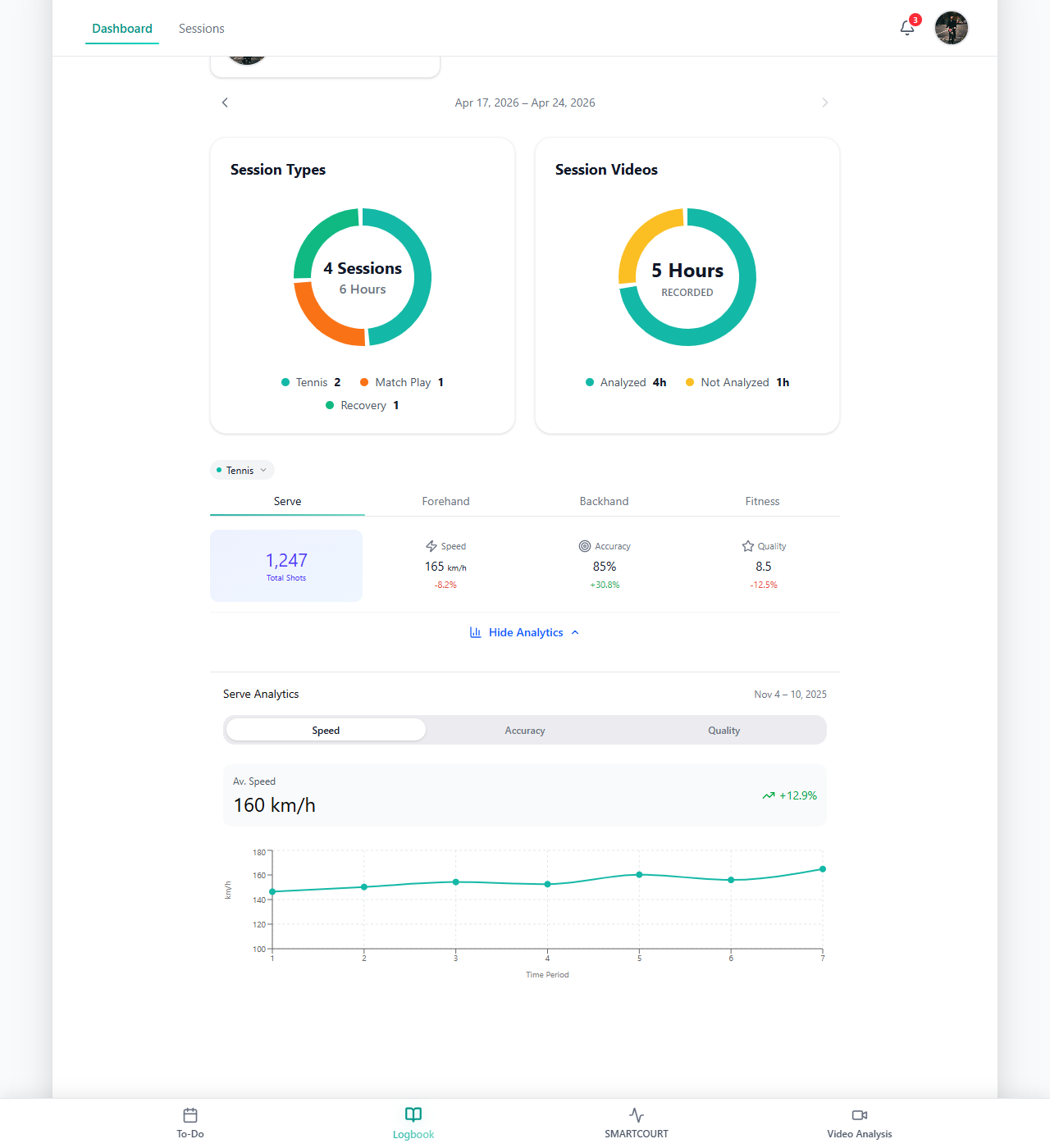
Charts and skill strips in Logbook are a primary place to see this story — open Logbook and use Show Analytics on the dashboard when your build exposes it.
Understand player development
Progress is more than statistics. It is the development of the athlete over time.
Analytics becomes more useful when it helps answer practical coaching questions:
- What is improving?
- What is staying flat?
- Where are the weaknesses?
- Which training blocks are producing the best results?
By connecting metrics, training history, and planning flows, CoachEye helps users move from isolated session results to a more complete view of development.
This is especially useful for coaches who work with athletes over time and need a clearer picture of strengths, weaknesses, workload, and response to training.
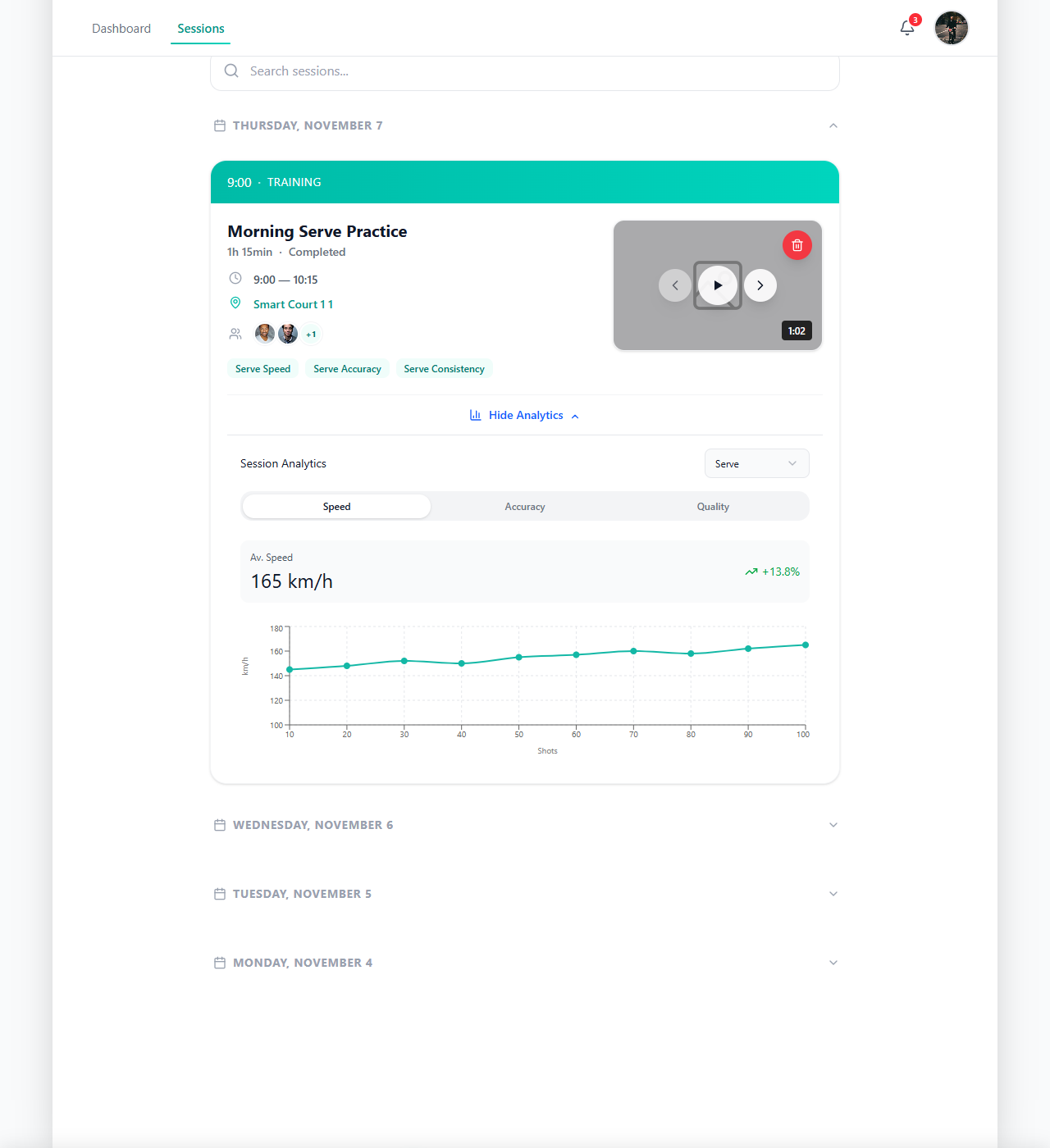
Session rows with video and expanded analytics tie numbers back to what happened on court — still in Logbook.
Keep a complete training and video history
Good analysis depends on good history.
CoachEye helps keep a long-term record of what happened across:
- sessions
- matches
- drills
- notes
- observations
- and linked video when available
Nothing important has to disappear after the session ends. Instead, video can be stored, reopened later, and reviewed again in the right context.
This matters because progress is rarely visible from one session alone. The real value comes from comparing work over time, returning to earlier footage, and seeing how technique, decisions, and performance are changing.
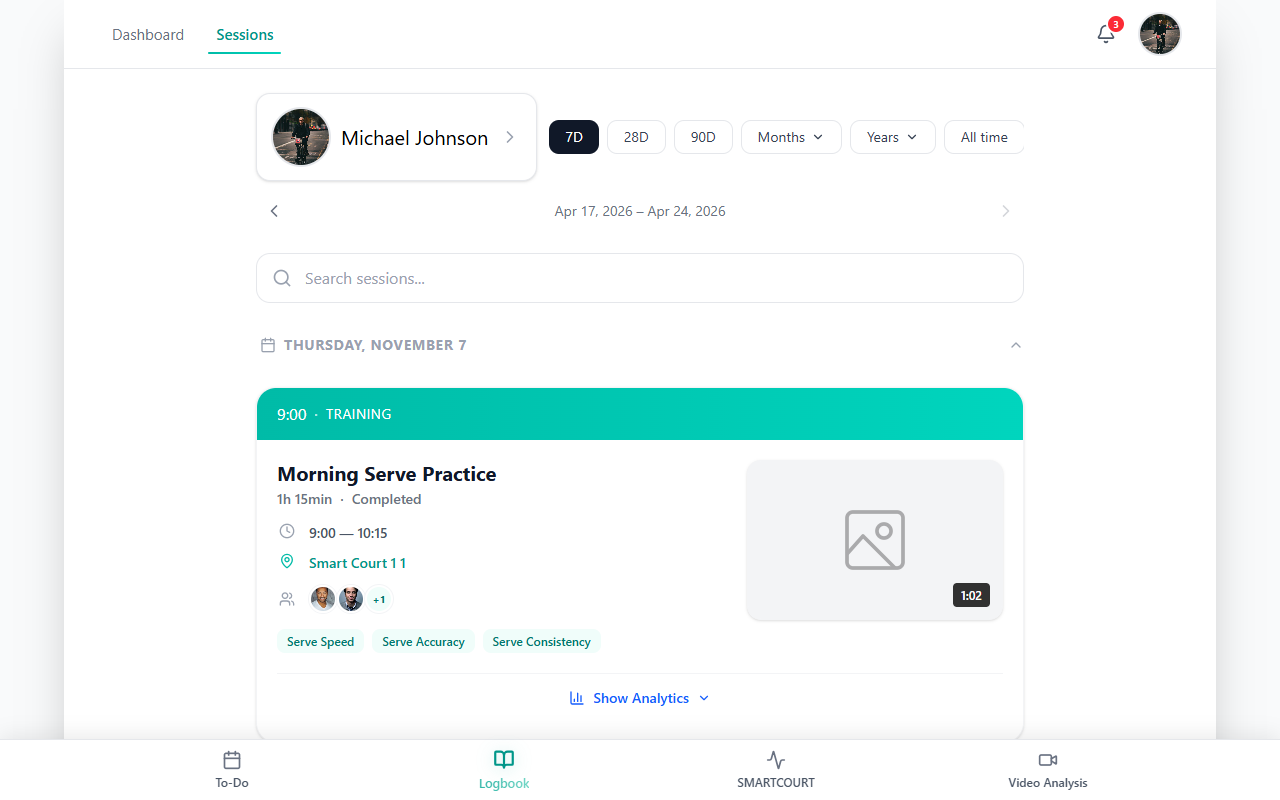
Use the Sessions view in Logbook for searchable training and match history.
AI, video, and progress tracking work together
Analytics & Progress becomes much more valuable when it is built on connected inputs.
CoachEye combines three important layers:
1. Structured training data
Training sessions, drills, matches, and planned work create the base layer of usable data — see Training Management, Today, and Development Plans.
2. Stored video and review context
Recorded footage adds visual evidence, so data stays connected to what actually happened on court — see Video & Smart Court and Video Analysis.
3. AI-supported recognition
AI helps identify useful metrics, patterns, and signals inside that data and video, making review faster, deeper, and more scalable — details vary by product version; see Version limitations and the guides above for scope.
Together, these layers help users do more than just collect information. They help users understand development and make better decisions from it.
From data to better coaching decisions
This is the real coaching loop behind Analytics & Progress:
Collect data → Analyze trends → Identify gaps → Adjust training → Improve performance
Here is how that works in practice:
| Step | Meaning |
|---|---|
| Collect | Sessions, drills, match activity, video, and results enter the system |
| Analyze | Trends, patterns, and AI-supported metrics clarify the picture |
| Identify | Strengths, weaknesses, and missed opportunities become easier to spot |
| Adjust | Planning and training focus update with more confidence — Development Plans, Training sessions |
| Improve | Athletes get more targeted work and better long-term outcomes |
This is what makes analytics useful. It is not just reporting. It is a tool for making smarter coaching decisions.
What changes for you
| Before | After |
|---|---|
| progress is difficult to measure clearly | improvement becomes more visible |
| it is hard to justify coaching decisions | decisions are supported by data |
| players rely too much on subjective feedback | players can see growth more clearly |
| useful video and session history are scattered or underused | video, metrics, and history stay connected |
| training can be adjusted earlier and more precisely |
Analytics does not replace coaching judgment. It gives that judgment a stronger foundation.
When Analytics & Progress becomes essential
This part of the system becomes especially important when you:
- work with players over the long term
- care about consistent development
- want to track performance more objectively
- need AI-supported recognition of important metrics
- want stored video to stay useful after the session ends
- manage multiple players or teams
- need a better way to compare progress across time
The more structured the training process becomes, the more useful analytics becomes with it.
Connected with the rest of your system
Analytics does not work in isolation. It becomes more valuable because it is powered by the rest of CoachEye.
- Training Management → structured session and match data
- Video Analysis / Video & Smart Court → visual context and reviewable footage
- Drills Collection / Create New Drill → connect performance to the exercises in use
- Development Plans → turn insight into future action
- Logbook → preserve the long-term history needed for real progress tracking
The more connected the workflow, the more meaningful the analytics becomes.
> The more structured your system, the more powerful your analytics.
Make progress visible
Improvement should not have to be guessed.
With Analytics & Progress, you can:
- see development more clearly
- measure change over time
- keep video and history connected
- use AI to recognize key performance signals
- turn those insights into better coaching decisions
And most importantly:
use all of it to help players get better.