
Usage scenarios
Use CoachEye as an AI-powered development planner for athlete progress
CoachEye helps athletes, coaches, parents, clubs, and academies turn training goals into a structured development process.
At its core, CoachEye is an AI-supported planning and analysis platform for racquet-sport development. It helps users define priorities, organize training, capture what happens on court, analyze video, track progress, and adjust the plan based on real performance signals.
Instead of treating training as isolated sessions, CoachEye connects the full athlete development loop:
Set goals → Plan training → Train on court → Capture video → Analyze performance → Track progress → Adjust the plan
Link the loop to Development Plans, Today, Training Hub, Smart Court, Video & Smart Court, Video Analysis, Logbook, and Analytics & Progress.
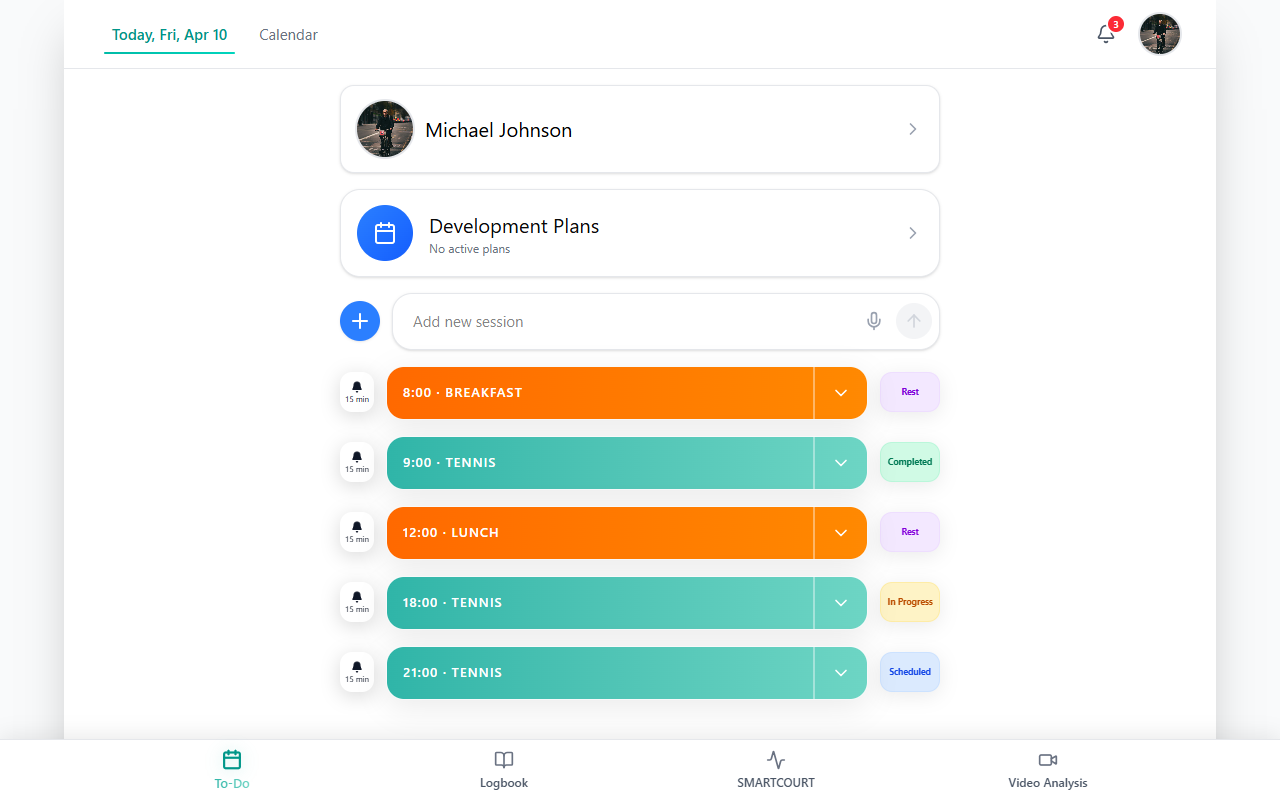
This makes CoachEye useful as a training planner, video analysis tool, progress tracking system, and AI assistant for helping athletes move toward better form and more consistent improvement.
What CoachEye can help you achieve
CoachEye can be used in different ways depending on the user, training environment, and athlete goals. Some users rely on it for planning and structure, while others focus on video review, AI-supported performance analysis, progress tracking, or communication between athletes, coaches, parents, and clubs.
CoachEye is especially useful when users need to answer questions like:
- What should the athlete focus on next?
- How should the training week be structured?
- Is the athlete progressing toward the right goals?
- What does the video show that was missed during the session?
- Which patterns appear repeatedly in training or matches?
- What needs to change before the next competition?
Key usage scenarios
1. Plan athlete development around clear goals
CoachEye can be used as a development planner for athletes who need more structure in their training process.
Athletes and coaches can define priorities, organize training around specific goals, and connect daily sessions with longer-term improvement. Instead of training randomly or reacting only to match results, users can create a more intentional plan for technical, tactical, physical, and performance development.
Links: Today · Development Plans · Training Management
2. Use CoachEye as a planner for reaching optimal form
CoachEye supports the process of moving an athlete toward better competitive condition by connecting training load, session structure, match preparation, recovery, and performance review.
A coach or athlete can organize a training week, balance different types of work, schedule sessions, include recovery, review progress, and adjust the focus as competition gets closer.
This makes CoachEye useful for:
- tournament preparation;
- return-to-form periods;
- technical development blocks;
- match-play preparation;
- long-term player development;
- coach-led or independent training.
The goal is not just to train more, but to train with better structure and clearer purpose.
Links: Schedule a match · Schedule a Training Session · Development Plans
3. Analyze video with AI-supported performance review
CoachEye can also be used as an AI-supported video analysis tool.
Users can capture training or match footage, review important moments, slow video down, leave notes, mark key events, and use AI-supported tools when they are available in your workspace to identify patterns and performance signals. Start from Video Analysis and Video & Smart Court.
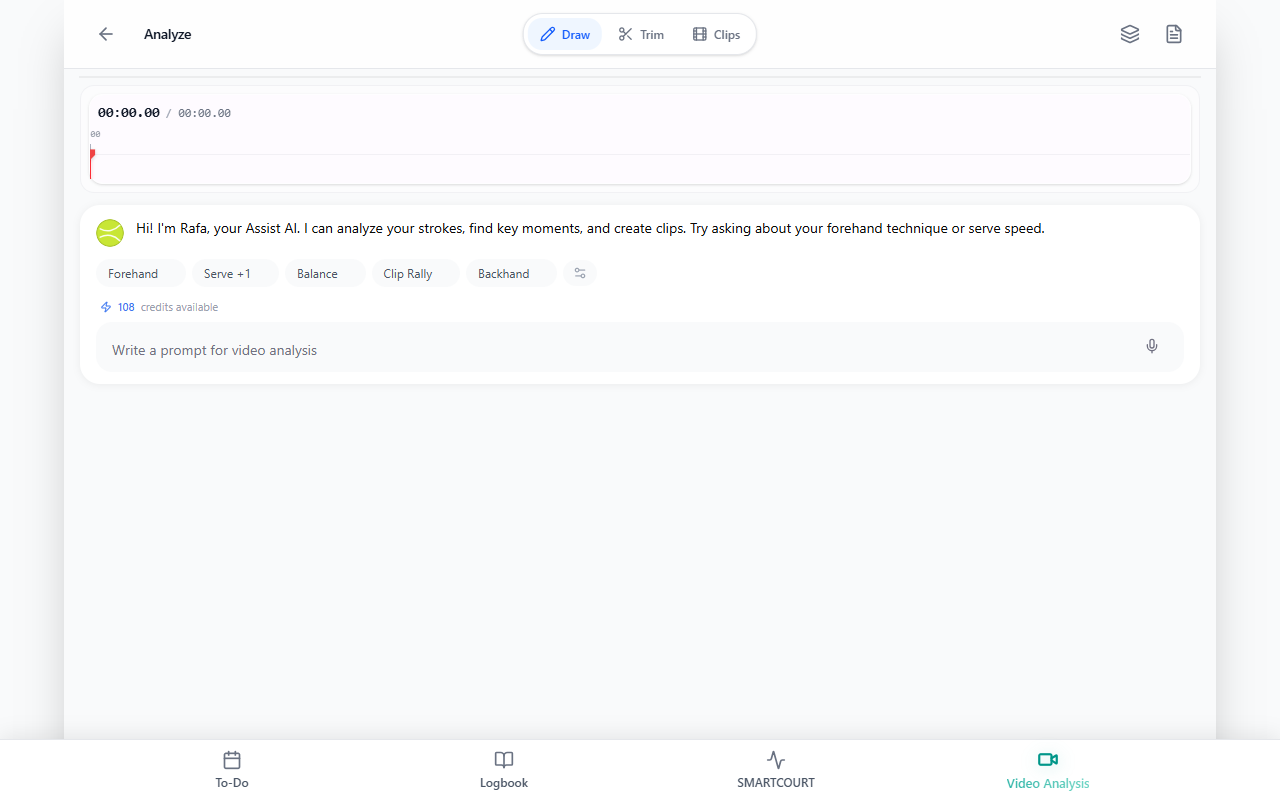
Video analysis is especially useful for:
- reviewing technique;
- studying movement and positioning;
- identifying repeated mistakes;
- comparing training goals with actual execution;
- preparing for opponents;
- explaining feedback visually.
AI does not replace the coach or athlete’s judgment — see Version limitations & MVP. It helps make review faster, more structured, and easier to connect with the next training decision.
4. Prepare and run more structured training sessions
CoachEye helps users move from improvised sessions to structured training.
Through Training Hub, Drills Collection, Training sessions, session templates, and planning tools, coaches and athletes can prepare sessions around specific development goals. During training, sessions stay connected to the plan — for example via Starting drills during a session and Smart Court: Start New Session.
A structured session can include:
- a clear training objective;
- selected drills;
- planned duration;
- technical or tactical focus;
- video capture;
- post-session review;
- follow-up actions.
Also: Create New Drill for custom content.
5. Connect Smart Court sessions with long-term progress
CoachEye connects on-court activity with the wider athlete development record.
Smart Court workflows help users start or manage sessions from a court-focused view, connect capture workflows, and keep court activity tied to later review. When video, session records, and progress tracking work together — Video & Smart Court · Logbook — each session becomes part of long-term development history.
This helps users move from:
Before: “We trained today.”
After: “We know what we trained, what happened, what the video showed, and what should change next.”
6. Track progress and adjust the plan over time
CoachEye helps users understand development over time through logbooks, session history, analytics, and review workflows.
Instead of judging progress only by short-term match results, users can look at a broader picture: what was planned, what was completed, what was captured, what patterns appeared, and how the athlete is changing.
Links: Logbook · Analytics & Progress
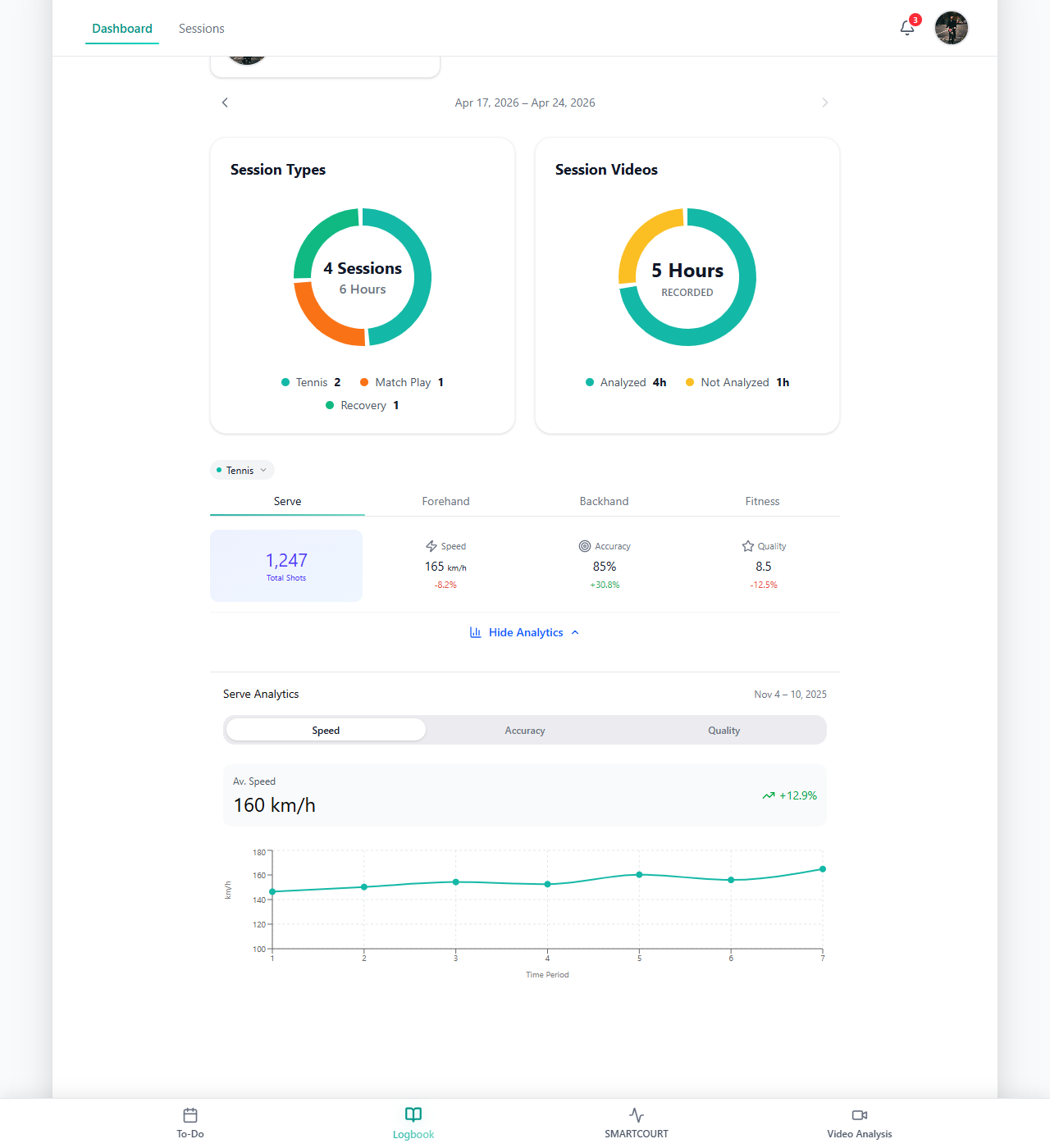
This supports better decisions such as:
- when to continue the same training focus;
- when to change the plan;
- which weaknesses need more attention;
- which strengths are becoming more reliable;
- how to prepare for the next match or tournament.
7. Improve communication between athletes, coaches, parents, and clubs
Athlete development often involves more than one person. Coaches guide the process, athletes execute the work, parents support the journey, and clubs or academies need visibility across many players.
CoachEye helps these groups work from a shared development picture.
Instead of relying only on short conversations, memory, or isolated video clips, users can refer to structured plans, session history, video review, logbooks, and progress indicators — including View and manage shared training logbooks.
By role: For Coaches · For Parents · For Clubs & Academies · For Individual Athletes
8. Prepare for competition and opponent analysis
CoachEye can support match preparation and opponent analysis.
Athletes and coaches can review match footage, identify patterns, study opponent tendencies, and turn observations into practical training priorities. Use Opponent analysis with Video Analysis, Development Plans, and Today.
For example, if an opponent consistently attacks second serves or struggles with wide balls to the backhand, that insight can shape the next training plan.
Opponent analysis can help users prepare for:
- serve and return patterns;
- rally tolerance;
- preferred attacking zones;
- movement weaknesses;
- pressure moments;
- tactical match plans.
Common ways to use CoachEye
As an AI development planner
Use CoachEye to organize an athlete’s development around goals, priorities, training blocks, and progress review.
This is useful when an athlete needs a clear path forward rather than isolated training sessions.
As a video analysis tool
Use CoachEye to review training and match footage, identify important moments, and connect observations to future training.
This is useful when users want visual evidence, clearer feedback, and more objective performance conversations.
As a training planner
Use CoachEye to plan daily sessions, weekly development work, drills, routines, matches, and recovery.
This is useful when athletes or coaches want training to become more structured and easier to follow.
As a progress tracking system
Use CoachEye to review what has been done, what has changed, and what should happen next.
This is useful when users want to understand development over time instead of relying only on memory or match results.
As a collaboration tool
Use CoachEye to keep athletes, coaches, parents, clubs, and academies aligned around the same development process.
This is useful when multiple people are involved in the athlete’s growth and need better visibility.
From goal to improvement
CoachEye supports the full development loop:
| Step | What to do |
|---|---|
| Define the goal | Identify what the athlete needs to improve. |
| Build the plan | Create daily and weekly structure — Development Plans · Today. |
| Train with purpose | Use drills, routines, sessions, and Smart Court workflows — Training Hub · Smart Court · Training sessions. |
| Capture performance | Record training or match activity — Video & Smart Court. |
| Analyze the evidence | Review video, mark moments, use AI-supported insights — Video Analysis · Analytics & Progress. |
| Track progress | Use Logbook and analytics — Logbook. |
| Adjust the next step | Turn insights into better planning, sessions, and preparation. |
This loop makes CoachEye more than a set of tools: it becomes a connected system for helping athletes work toward their goals with more clarity, consistency, and confidence.
Explore usage scenarios by role
For Coaches
CoachEye helps coaches organize athletes, plan sessions, review video, track progress, and turn training history into better coaching decisions. It gives coaches a structured way to manage development across one or many players without relying on scattered notes or disconnected tools.
Learn more: For Coaches
For Clubs & Academies
CoachEye helps clubs and academies create a more consistent development system across coaches, athletes, courts, and training programs. It supports better visibility, standardization, video-based review, and progress tracking at scale.
Learn more: For Clubs & Academies
For Parents
CoachEye gives parents a clearer view of the athlete’s training process, progress, video review, and development priorities. Instead of relying only on match results or short updates, parents can better understand whether training is structured and moving in the right direction.
Learn more: For Parents
For Individual Athletes
CoachEye helps individual athletes take ownership of their development through planning, drills, video analysis, progress tracking, and match preparation. It can be used as a personal AI-supported training planner for building structure and working toward better form over time.
Learn more: For Individual Athletes
Opponent analysis
CoachEye can help athletes and coaches review opponent footage, identify patterns, and turn observations into practical training priorities. This makes competition preparation more specific, visual, and connected to the athlete’s next training plan.
Learn more: Opponent analysis
Related
- Product Overview — platform narrative and full loop.
- Core concepts — Logbook, Smart Court, Video Analysis vocabulary.
- Quick start — navigation and logbooks.
- Analytics & Progress · Training Management · Video & Smart Court